Pip & Nut has turned a leaping squirrel, an unstabilised product and its founder’s story into a coherent brand. Pippa Murray explains how it has kept that identity while moving into mass media and new categories…
Pip & Nut has two extremely strong brand signals. One is visual: the now-iconic leaping squirrel across its packaging and advertising. The other is physical: the natural oil that rises to the top of its nut butter.
The first, the squirrel, drives recognition whilst the in-jar separation supports the company’s steadfast stance on containing no palm oil.
Customers initially complained about having to stir the product; Murray says those complaints have largely disappeared as shoppers have become more interested in natural ingredients.
“You get a jar of really processed, Americanised peanut butter and it’s so set, stabilised and congealed,” she says. “There’s still a bit of frustration with stirring, but you’d rather it was that way.”
The separation gives Pip & Nut a marketing claim that shoppers can verify for themselves. Removing the stabiliser changes how the product behaves.
Building the brand from the product
Murray started Pip & Nut while training for the Paris Marathon. Peanut butter was her preferred running fuel, but she found few natural options in supermarkets and little innovation in the category. She began making recipes in her kitchen and selling them at London markets. This allowed her to test different products and flavours before investing in large-scale manufacturing.
Pip & Nut launched nationally through Selfridges in January 2015. Its first range included smooth peanut butter, smooth almond butter and coconut almond butter.
The less familiar products helped it win listings. A new company had little chance of displacing established smooth and crunchy peanut butters immediately. Almond butter and unusual flavours gave retail buyers something different.
“When you’re starting something, you can exploit niches in order to get onto shelves,” Murray says. “Then you can broaden out.”
Pip & Nut became the UK’s leading almond-butter brand before reaching the top of the wider nut-butter category, she says. The niche created a route into the mainstream market.
The decision to avoid palm oil gave the brand a clear position, although it made production harder. Palm oil stabilises nut butter and prevents separation. Removing it creates challenges around consistency and shelf life.
“When you make food products for retail, the more ingredients there are, the simpler it is,” Murray says.
That operational difficulty strengthens the marketing. The short ingredient list requires additional work, giving the product claim substance.
Creating distinctive assets
Murray wanted the brand to have clear principles without sounding judgemental. Nut butter is an everyday pleasure, so the identity needed warmth, humour and broad appeal.
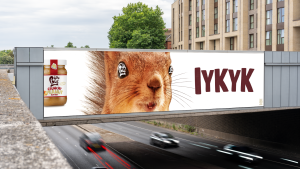
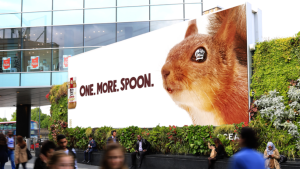
The squirrel provided a memorable way to communicate natural ingredients and energy.
“It embodies the naturalness and the fact that the brand is rooted in nature,” she says. “Squirrels are very energetic creatures and obviously love nuts.”
Its movement also connects with Murray’s running background. The company continues to use running events for marketing and sampling, tying its founder story to a relevant consumption occasion.
The name adds another asset. Many shoppers do not initially realise there is a real Pip behind Pip & Nut. When they discover Murray’s role, the name connects the national brand with the founder who began making products in her kitchen.
“People buy from people,” she says. “It creates that human connection.”
This personal element helps distinguish Pip & Nut from larger food manufacturers. It also supports the company’s premium positioning while keeping the brand accessible to families.
Pip & Nut’s B Corp certification, charitable giving and internal initiatives provide further evidence for its public values. These activities may not appear in every campaign, but they reduce the gap between the company’s image and its behaviour.
Setting limits on AI
Pip & Nut recently used artificial intelligence to animate its squirrel for a major advertising campaign.
The company placed clear limits on the technology. The source photography featured real squirrels photographed in Norway. The products were filmed. Human creatives developed the idea and directors controlled the execution.
AI was used to animate an established character rather than invent the campaign.
Murray is blunt about the risk of relying too heavily on the technology.
“You can tell when something is AI,” she says. “It just feels like slop.”
The campaign took more than six months to complete and was no quicker than a conventional production. Much of that time was spent refining the output and protecting the character of the brand.
“Whilst AI can speed you up in some regards, you have to make sure you slow down so that you don’t rush it.”
The process offers a useful model for brands experimenting with generative technology. Pip & Nut used original source material, kept the physical product real and retained human control over the concept. The team decided what AI was allowed to change.
That discipline mattered because the squirrel already carried years of recognition. A poor execution could have weakened one of the company’s most valuable assets.
Combining reach with relevance
Murray describes Pip & Nut’s media approach as “two-speed targeting”.
National advertising builds awareness across the UK. The company is stocked nationally, so its marketing needs to reach consumers beyond London and other major cities.
Social media, events and sampling are more tightly focused. Running events are particularly valuable because they connect the company’s origin, its products and the moment of consumption.
Murray calls the post-exercise period the “perfect serve”. The consumer is hungry and looking for something nutritious that still tastes good.
“Get into the shoes of your consumer,” she says. “Where might I want to see Pip & Nut? Where do I want to interact with it?”
This gives the brand broad reach while placing the product in situations where it has immediate relevance.
Stretching into protein bars
Pip & Nut is now taking the same approach into protein bars. Murray saw a crowded category filled with products she found over-processed, unappealing and burdened with long ingredient lists.
The company’s bars use nuts for a significant share of their protein and fit naturally with the active-lifestyle associations built through running.
At the time of the interview, snacks accounted for around a third of Pip & Nut’s business and were growing by almost 200 per cent that year.
The move shows how distinctive brand assets can support category expansion when the new product shares the same consumer problem and product philosophy.
Murray remains wary of pushing for growth faster than the brand can support.
“It takes time to build a brand in the mind of the consumer,” she says. “Consumers need time to trust and understand what you’re about.”
Pip & Nut has spent more than a decade repeating a focused set of signals: natural ingredients, visible product choices, a recognisable squirrel, a real founder and a clear consumption occasion. Their consistency has made the brand easier to recognise and harder to imitate.
Click here to sign up to Retail Gazette‘s free daily email newsletter