Functional drinks are moving into the mainstream, but industry experts say success will depend on supply chains and innovation keeping pace with changing consumer demand.
The UK’s functional drinks market is growing fast, with sales rising 24.5 per cent over the past year. Almost 30 per cent of UK households now buy functional drinks, and the category is worth around £178 million, according to Worldpanel by Numerator.
It is understood that the trend is being driven by consumers looking for more than refreshment. Drinkaware says 44 per cent of UK drinkers now use alcohol-free or low-alcohol drinks to help moderate their drinking, up from 31 per cent in 2018.
For retailers and suppliers, however, rapid growth brings a different challenge. Functional drinks have historically been built around the latest “hero” ingredient, from CBD to collagen and probiotics. But, as consumer tastes evolve and ingredient trends change, experts say brands must keep innovating without losing their identity or disrupting supply.
That is pushing some manufacturers to build products around a consumer need rather than a single ingredient, giving them greater flexibility to adapt formulations as nutritional advice, category regulation and shopper demand evolve.
Building a brand beyond one ingredient
TRIP is one of the brands betting on that approach. According to co-founder and CEO Olive Ferdi, the biggest shift in the category is towards mental wellbeing.
“The fastest-growing need we see is around calm and mental wellbeing,” she says. “For years, functional drinks have focused on very physical benefits such as more energy, better gut health and high protein. We believe the next wave is emotional and mental health.”
She notes that consumers are looking for products that fit into everyday life. “Stress, anxiety and overwhelm are universal, everyday problems, and people are actively looking for simple ways to feel better.”
Rather than building products around one ingredient, Ferdi says the business focuses on the outcome consumers want.
“All TRIP products are made to support how people want to feel – calmer, more balanced and more grounded – rather than chasing trends for individual ingredients.”
That strategy has also influenced how the company develops its range. Consumer awareness of functional ingredients has not always kept pace with interest in the category, particularly as new ingredients emerge. Ferdi says education is therefore a key part of the business.
“Education and trust are absolutely central to how we operate,” she says. “Functional drinks only work if consumers understand what they’re drinking and why it matters.”
She says the business follows scientific evidence and aims to be transparent about its ingredients while working with retailers to help explain the category.
Importantly, she says the company has avoided becoming associated with just one ingredient, or being known as simply a ‘CBD’ brand, with now less than 10% sales coming from their CBD ranges.
“We believe it’s really important not to anchor TRIP to a single ingredient. We’re about calm as a feeling, not specific ingredients that can be affected by changing trends. Today we actually sell more magnesium products than CBD. The ingredients evolve, but the benefit of ‘calm’ stays consistent.”
That flexibility could become increasingly important as the functional drinks category continues to expand.
Ocado Retail recently reported a 54 per cet increase in functional drinks sales over the past year. Its research found that 60 per cent of Gen Z consumers see functional drinks as an alternative to alcohol in social settings, while almost half say they have already replaced alcohol, soft drinks or energy drinks with functional drinks.
For brands, reaching those consumers means being present across multiple channels.
Ferdi says TRIP’s growth has been supported by an omnichannel strategy spanning supermarkets, convenience, health retailers, direct-to-consumer, Amazon and TikTok Shop.
“We meet consumers wherever they are, with the right offering and message for that moment,” she says.
“Being omnichannel also protects the brand from relying too heavily on one occasion or one retailer, which is critical in a fast-moving category.”
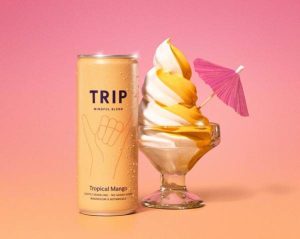
The company is continuing to invest in innovation as it expands its retail footprint. This summer, TRIP launched its first tropical flavour, Tropical Mango, containing magnesium alongside the brand’s botanical blend.
The product is rolling out across major UK retailers including Tesco, Sainsbury’s, Waitrose, Morrisons, Boots, Holland & Barrett and Selfridges. The launch is also being supported by the company’s largest marketing campaign to date, including a social media campaign and celebrity ambassadors.
The company says it is now stocked by the UK’s top 12 national grocery retailers and is on a run rate of £80 million in annual revenue following triple-digit profitable growth in 2025.
Looking ahead, Ferdi says innovation will remain focused on the company’s wider mission rather than short-term trends.
“We’re looking to be pioneers in both functional drinks and supplements when it comes to offering people convenient and pleasurable ways to improve their mental wellbeing.”
She says the business plans to explore new formats and strengthen partnerships with retailers and brands that share its values.
For grocery buyers planning ranges for 2026, his advice is to focus on consumer needs rather than individual ingredients.
“Categories are built by brands and aspirational storytelling, not ingredients alone,” She says. “Shopping functional products can be confusing, so work with brands to help people simplify and decode the category, making it easier to shop.”
She believes the strongest performers will be brands that combine credibility with clear communication.
“The brands that will win are the ones that are credible, science-led, emotionally resonant and genuinely scalable. Calm, mental wellbeing and balance are not trends – they’re long-term cultural shifts – and ranges that reflect that will outperform.”
Click here to sign up to Retail Gazette‘s free daily email newsletter