Victoria Jenkins, founder and CEO of adaptive and universally designed fashion brand Unhidden, is nominated for Women in Leadership at this year’s RG Retail Excellence Awards. She says retailers can no longer afford to treat disabled consumers as a new audience, arguing that adaptive fashion could be both commercially powerful and life-changing.
“I really resent the term niche because I don’t think one in four people is niche,” she stresses. “[Retailers] already have disabled consumers, but now I think it’s time to actually sell to them.”
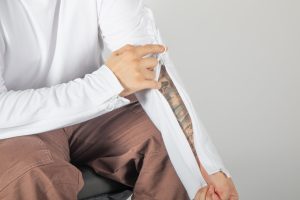
Adaptive clothing (garments designed with features such as magnetic fastenings, hidden openings, seated fits, elasticated waists and easier closures) remains underserved by mainstream fashion, despite growing demand and a clearer commercial case.
Primark is one high street retailer trying to change that. The discount fashion retailer works with Jenkins to develop adaptive clothing after launching adaptive underwear. In 2025, it unveiled a 49-piece range including jeans, jumpers, T-shirts, trench coats and other staples with accessible features.
For Jenkins, the bigger story is not one brand’s range: “It’s a very rare thing in retail to do something that does so much good and literally changes lives and makes you money. It’s not very often that you get to say that.”
The business case for adaptive fashion
Jenkins argues that the commercial rationale is obvious. The disabled community’s global spending power is often framed as the “purple pound”. Charity Scope estimates this UK market is worth £274 billion a year.
There is also the ageing population, temporary injuries and long-term health conditions all of which expands the number of people who may benefit from clothing that is easier to use.
“80 per cent of the disabled community acquire it, much like I did,” Jenkins says. “It could happen to anybody at any time.”
Her own career has made her one of the UK’s most visible voices in adaptive fashion. She founded Unhidden in 2016, launched its first range in 2020, became part of the British Fashion Council ecosystem and brought adaptive fashion to London Fashion Week. She has been a guest judge of The British Sewing Bee twice, with the show also featuring an amputee model since series nine.
Jenkins is heading to Manchester Fashion Week this September, partnering with circular fashion platform Reskinned; working with the Hidden Disability Sunflower Lanyard to create the world’s longest lanyard ribbon to make festival cape; and comedian Rosie Jones will model a bedazzled T-shirt designed by Jenkins.
While such events are a boost for awareness, she says the aim is to make inclusive design a normal part of how the fashion industry thinks.
“When you include disabled people in any kind of design, ultimately it benefits everyone else,” she says.
She highlights the “curb cut effect”, where design originally created for disabled people improves access for the wider population. “The opportunity is there to learn, to make, to build better products.”
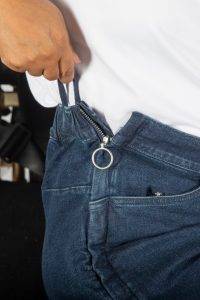
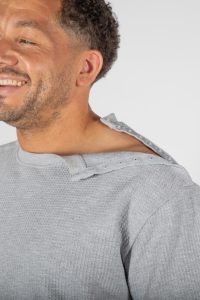
That could mean a zip that is not decorative but functional, a trouser waistband designed to support people after surgery, or a chest opening that gives access to a port. In some cases, Jenkins says, retailers may already be closer than they realise.
“There are so many clothes that I refer to as accidentally adaptive,” she says. “Elasticated waistbands help people with surgery, IBS, stomas. Some brands are probably further down the road than they think — they’re just not highlighting it or signposting it.”
A seat at the table
If the opportunity is so clear, why have more fashion retailers not acted? Jenkins’ answer is simple: “fear and ignorance”.
She explains: “They’re scared. It means an awful lot more scrutiny they have to place on themselves. It means they’re going to have to look at who they hire, who they have been excluding in the hiring process.”
She believes many businesses underestimate the scale of demand because disabled people are not in the rooms where products, stores and campaigns are being designed.
That absence creates a negative cycle. Brands do not see the need because they do not employ or listen to the people who can explain it.
“If you don’t ever come across a disabled person, much like me, I worked in fashion and it hadn’t occurred to me until somebody else mentioned it to me in hospital, then it suddenly becomes very obvious,” she says.
Jenkins is also clear that inclusive work cannot be treated as unpaid advice. Brands frequently need consultancy, focus groups and lived experience to design effectively, but that expertise should be valued like any other commercial input.
“There are plenty of us that are consultants in this space that are more than happy to be paid to share our knowledge and skill sets,” she stresses.
One-off launches are not enough
Primark’s work is an example Jenkins returns to repeatedly, not only because she co-designed elements of the offer, but because she sees consistency as essential. Adaptive fashion cannot be treated as a campaign moment, a capsule drop or a corporate responsibility exercise that disappears if initial sales are slow.
“The ideal brand partnership is one where it’s not just a one-off,” she says. “That has been an issue in the past. They do it and then maybe it doesn’t sell as well, so then they stop doing it. Well, how many people did you tell and how often?”
Marketing and discovery are particular challenges. Jenkins says digital advertising systems can make it harder to reach disabled customers because disability-related language and imagery can be flagged or restricted.
For a small adaptive fashion brand, that creates a commercial hurdle. For major retailers, she argues, it creates a responsibility to use their scale to push for change.
“That is why I’ve always chased PR, because that’s the only way new people really find out about us,” she says. “We need the bigger brands. The reach is still bigger than mine would be.”
For retailers, that means accessibility must run beyond product development. It includes website content, social media, store design, signage, changing rooms, fulfilment and customer service. Jenkins points out that supermarkets may be particularly well positioned because many stores are on one level and customers can buy clothes alongside groceries, reducing the friction of a separate shopping trip.
“People being able to go into one shop and get their food and their clothes is a win-win because just going out is a bit of a problem,” she says.
Affordability, access and scale
Price remains one of the most difficult issues in adaptive fashion. Specialist brands often face higher costs because they produce smaller volumes and use more complex construction. Consumers, meanwhile, are already under pressure and may resent paying more for clothes that meet basic access needs.
Jenkins explains: “Adaptive designers catch it a lot with the consumer being annoyed at the price points. We’re ordering in smaller quantities and don’t have that kind of backing. People have also forgotten what it costs to get things made. It’s very human-led.”
That is why partnerships with larger retailers matter. Their buying power, logistics and store networks can bring adaptive design to shoppers who may not otherwise encounter it. Jenkins says home delivery can also make a meaningful difference when physical retail environments remain difficult to navigate.
She is optimistic that more mainstream players are beginning to recognise the opportunity. Value retailers and supermarket fashion businesses, in particular, have the potential to normalise adaptive design because they already serve broad customer bases.
Still, Jenkins is wary of tokenism and the so-called ‘halo effect’, where brands benefit reputationally from inclusion, without embedding meaningful change. “It has to start at the top to trickle down,” she notes. “The right partners need to see it as a complete company mindset shift.”
Listening properly
For fashion businesses wondering where to begin, Jenkins’ advice is straightforward: make digital content accessible, listen to more than one disabled person, pay for proper research, and be prepared for critique.
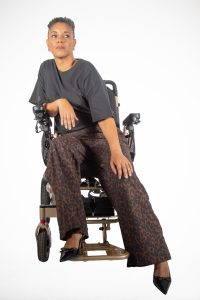
Jenkins describes: “When you meet a disabled person, you’ve met a disabled person. You could ask one wheelchair user what they want and it might be completely different to another wheelchair user.”
Focus groups, fit sessions and customer testing all matter because disability does not look one way: “There’s no such thing as a 100 per cent accessible product. What makes something accessible for one person takes it away from someone else.”
That does not mean brands should avoid the space. Quite the opposite. Jenkins believes disabled consumers are becoming more vocal, more organised and less willing to accept exclusion as inevitable.
“You can’t look a disabled person in the face and say, ‘No, I don’t want to include you.’ Why don’t you?” she questions. “We’re getting more rowdy as a consumer category. Brands are going to have to start answering why they aren’t doing it, and I think that’s a really valid question.”
For an industry constantly searching for growth, loyalty and relevance, adaptive fashion offers all three. But Jenkins insists the prize is bigger than another range on a rail. It is the chance to design retail around real lives, rather than expecting customers to adapt to products and stores that were never built with them in mind.
Jenkins joins leaders from NIFT, Noli, The Puppet Company, Lush, Wayfair and many more in the Women in Leadership category. This year’s RG Excellence Awards will be hosted at the Underglobe on 14 October 2026.
Click here to sign up to Retail Gazette‘s free daily email newsletter