

Physical retail has spent years being told it needs to “catch up” with digital. That framing never quite rang true. The real story now is that the best retailers are finally using tech to fix very physical problems. Those are wasted labour, patchy availability, clunky service, thin margins and forgettable shopping trips.
In essence, the shop floor is where all of retail’s most fundamental tensions show up at once. It’s where labour costs bite, where stock accuracy really matters, where queues annoy people, where staff get stretched, and where brands increasingly want attention at the point a purchase is actually made.
The most interesting store investments coming through now are changing how the store works, or what it can earn, or how it feels to shop there.
Here are five of the clearest recent examples.
1) Electronic shelf labels are turning the shelf edge into live infrastructure
This is one of those investments that sounds dull, until you think about what it fixes.
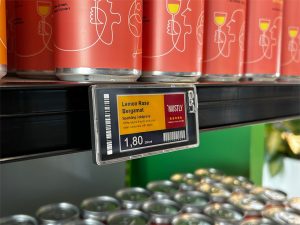
Co-op recently partnered with VusionGroup to replace paper labels with electronic shelf edge labels across its near-2,400 stores, in what the supplier described as the largest single-retailer rollout of its kind in the UK and Ireland. Co-op has been explicit about the upside; clearer and more accurate information for shoppers, instant communication of member pricing, less paper waste and easier online order picking.
Waitrose is making a similar play, rolling out electronic shelf labels across its estate by the end of 2026, with the stated goal of cutting the time Partners spend on manual ticket updates so they can spend more time with customers.
Asda, meanwhile, is rolling the tech across 250 Express stores after a Manchester trial, saying the labels free colleagues from replacing prices by hand and give them more time for customers, deliveries and replenishment. Asda said around 700,000 digital displays would be installed across those stores.
That’s the core point of this technology. Not novelty, but smarter, more responsive stores. The shelf edge becomes a live operating surface rather than a static strip of paper, which means better pricing accuracy, faster execution and more time for staff to do the things customers actually notice.
In other words, one of the most meaningful bits of store tech right now is not glamorous at all, but it is a fundamental re-engineering of the basics.
2) The trolley is becoming a checkout, a media channel and a data stream
Smart carts have been talked about for years, but most of that conversation has felt slightly speculative. Carrefour Israel’s latest move makes it feel more concrete.
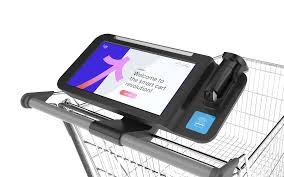
The retailer and A2Z Cust2Mate have signed a five-year agreement worth about $50m to deploy 4,000 smart carts across Carrefour Israel stores, with rollout due to begin in the third quarter of 2026 across six flagship sites. The agreement goes beyond the hardware itself, spanning charging infrastructure, software, long-term support, retail media and data monetisation.
The commercial ambition here is vast. Carrefour Israel said the agreement is expected to generate about $35m in profit, with the carts intended to improve the shopper experience through faster checkout and more personalised promotions, while also driving same-store sales and operational efficiency.
That’s why smart carts are getting more serious attention. The trolley is no longer just a trolley, but potentially a self-checkout device, a promotional screen, a customer data touchpoint and a retail media asset all at once.
That doesn’t mean every retailer should rush to roll them out. It’s a big operational commitment, and one that only works if shoppers genuinely find it useful. But this deal shows what retailers now want from store tech. Not a single-point solution, but a piece of kit that can solve multiple commercial problems at the same time.
3) In-store retail media is moving to hard numbers
Retail media is already enormous, and still growing. Omdia said in September 2025 that the sector is projected to exceed $300bn by 2030, accounting for roughly a fifth of global advertising revenue.
The question for stores is whether the physical environment can capture a meaningful slice of that money.
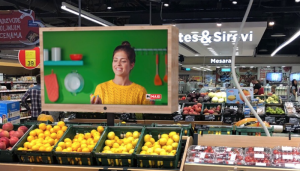
There’s good reason to think it can, but only if retailers stop treating screens as automatic value creators. One of the more interesting recent case studies comes from Noel Leeming, where a SharkNinja campaign run through Market Media and Zitcha used in-store screens alongside on-site, off-site and email activity. According to Zitcha’s case study, it delivered a 12 per cent uplift in hero SKU sales, more than 830,000 impressions, 6,400-plus clicks and more than $15 ROAS on Facebook.
That’s strong evidence that in-store media can work when it’s connected to the wider retail ecosystem and, crucially, measured properly.
Measurement is the real issue now. In-Store Marketplace and Catalyst Media Consulting argued in a new report this month that in-store media’s biggest problem is not a lack of technical measurement, but a lack of alignment over what success even means. Their proposed Shopper Purchase Rate framework is built around product movement, units sold and shopper behaviour, rather than just impressions.
The store is, after all, not a website, and it shouldn’t be measured as though it is one. If retailers want brands to keep shifting budget into stores, they need to show more than dwell time and screen delivery. They need to show that product actually moved.
Done well, in-store retail media gives retailers a new revenue stream and gives brands access to shoppers right at the point of decision. Done badly, it is just more noise in the aisle. The next phase will be about proving which is which.
4) Some of the smartest tech is now being aimed at colleagues, not customers
For a long time, store tech was sold mainly through the lens of customer convenience. That’s changing. Retailers are under too much pressure on labour, safety and service consistency to ignore the needs of colleagues on the shop floor.
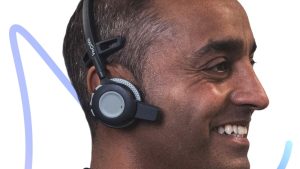
Co-op’s latest five-year partnership with VoCoVo is a good example. The convenience retailer is deploying VoCoVo’s Series 5 Pro headsets to more than 2,300 stores after a pilot across 114 locations.
The rollout began in February 2026 and is intended to improve colleague communication and safety, simplify day-to-day operations and enhance customer experience. According to Co-op, almost nine in 10 colleagues preferred the new headset for comfort, usability and sound quality.
That may not sound as flashy as holograms or AI shopping assistants, but it gets to the heart of what many stores need most, being faster communication, quicker response times and better support for frontline teams.
A lot of retail’s productivity problem is really a coordination problem. Who is free? Who can unlock a cabinet? Who knows where the stock is? Who can come to till support? Who can help with a parcel collection? If communication is slow, the whole store feels slower.
5) The store is becoming more personal, and a bit more theatrical
Not every in-store innovation is about removing friction. Some of it is about adding something back in, wether that be service, theatre, confidence, memorability.
FatFace recently launched its first in-store personal styling service, Face to Face, in six UK stores, with appointments bookable online or in-store. At the same time, it added a WhatsApp channel for support with orders, returns and general enquiries. Retail Systems reported that nearly one in five FatFace customer service contacts now come through WhatsApp, and that the retailer has responded within an hour 98 per cent of the time so far during the current spring-summer season.
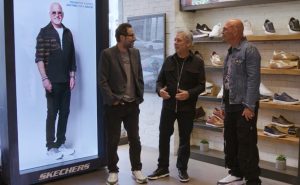
Skechers, meanwhile, has gone in a more overtly experiential direction. The brand installed a permanent Proto hologram at its Manhattan Beach store in Los Angeles, bringing ambassador Howie Mandel to life as an interactive 3D in-store experience.
Shoppers can engage with the hologram, take a “proto selfie” and unlock a promotion. FashionUnited reported that Skechers president Michael Greenberg described retail as “theater” and said he hoped to see the concept rolled out more widely.
These are very different examples, but they point to the same shift. Stores are being asked to justify the trip. Sometimes that means better advice. Sometimes it means faster service. Sometimes it means giving shoppers something a website simply cannot.
And that, in the end, may be the clearest theme running through all of this.
The strongest store tech investments understand what a shop is actually good at, then make it better. Smarter shelves. More useful trolleys. More accountable media. Better connected staff. More memorable visits. That’s where the real opportunity is now, in making the four walls work harder.
Click here to sign up to Retail Gazette‘s free daily email newsletter

