From John Lewis’s talking toy dog to Asda’s festive rave, retailers are taking very different approaches to Christmas 2026. Early audience research suggests shoppers enjoy the spectacle, even as they question whether brands should be spending so much on it…
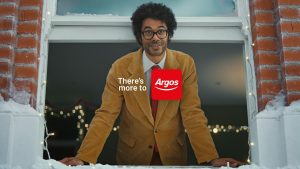
Kevin the Carrot is busy looking for a missing dog, and it seems that the BFG is feeling poorly. Richard Ayoade is being visited by Argos toys, while Dame Kristin Scott Thomas is taking present-buying advice from a talking wooden dog.
At Asda, meanwhile, Christmas has become a rave.
Britain’s retailers are back in their festive advertising finery. But while agencies debate who has made the season’s most moving film, shoppers have a less romantic suggestion; make Christmas cheaper.
In research carried out by OnePulse before this year’s supermarket campaigns launched, 57 per cent of UK consumers said they would rather retailers spent less on Christmas advertising and passed the savings on through lower prices. And 61 per cent said a Christmas advert had never changed where they did their main festive food shop.
Yet show people the adverts, and the response is rather warmer. In OnePulse’s early testing, Sainsbury’s and John Lewis both averaged 3.8 out of five, while Tesco scored 3.6. Some 72 per cent liked or loved Sainsbury’s BFG campaign; 68 per cent felt the same about John Lewis.
So, shoppers can resent the spend and enjoy the result. Yet for those on the coalface of these marketing efforts, it raises a more useful question than which film wins Christmas. What does that enjoyment actually do for the business?
The price of Christmas magic
This is hardly an easy year in which to defend a lavish production budget. Sensormatic Solutions found that 63 per cent of consumers prioritise price when gift shopping, while the average planned Christmas budget has fallen 10 per cent year on year to £504.70.
Asda has responded with its high-energy ‘All of Christmas at Asda Price. BOOM!’ campaign, trading the traditional tearjerker for dancing, noise and a very obvious value message.
“The reality is customers don’t want to do less at Christmas, they simply want to spend less on it,” says Asda group marketing director Tom Hampson.
It’s a clear proposition. But wanting low prices at the checkout isn’t the same as wanting to watch an advert about them. OnePulse found that 42 per cent of shoppers wanted joyful, uplifting fun from festive supermarket advertising, while 28 per cent wanted warmth and comfort.
And that leaves room for something less transactional.

Comfort sells…but does nostalgia?
Sainsbury’s has returned to Roald Dahl’s BFG for a third Christmas. In The Big Delivery, the giant has fallen ill and supermarket colleague Annie brings him a festive feast. There’s plenty of familiar fantasy, but also a starring role for the retailer’s Taste the Difference food.
The formula appears to be landing. Some 51 per cent of respondents in OnePulse’s launch-period testing said the advert made them feel festive, and 63 per cent wanted the BFG back next year.
Melissa Minkow, global director, retail strategy and insights at CI&T, thinks comfort has a particular appeal in an exhausting news environment.
“Given the intensity of the 24/7 news cycle and the chaos that comes with that, I would think consumers will be broadly appreciative of any marketing efforts that provide feelings of comfort,” she says.
“Comfort is an easily uniting, safe sentiment, so brands would be wise to create content that delivers on that emotion.”
Minkow particularly enjoyed Sainsbury’s Roald Dahl campaign. She also points to Gen Z’s appetite for 1990s fashion and music as a reminder that nostalgia needn’t depend on remembering an era first-hand.
Aldi clearly sees value in familiarity, too. Its latest teaser brings back Kevin the Carrot (a now ten-year-old mascot for the festive season), searching for Cauli Dog. OnePulse found that 63 per cent of shoppers wanted Kevin to return.
Very’s flamingo family tells a similar story about the rewards of consistency. The company says recognition of its brand campaigns has doubled since the characters arrived in 2023. Its new, AI-assisted advert earned a 5.9-star System1 score, the strongest pre-launch result Very has recorded.
Those measures aren’t directly comparable with OnePulse’s enjoyment ratings. But they highlight an important fact. A familiar character can entertain today and, over time, make a brand easier to recognise tomorrow.
The celebrity alternative
Other retailers are pursuing attention through star power. Sports Direct and Nike have recruited Erling Haaland and a cast of sporting and music stars, while Argos has cast Richard Ayoade in a Christmas Carol-inspired journey through the retailer’s past.
And Tesco’s The Wrong Address stars Roisin Conaty and Anna Maxwell Martin as old friends reunited by a grocery delivery mix-up. The film made 28 per cent of OnePulse viewers well up.
Interestingly, just 17 per cent of consumers in OnePulse’s earlier survey said they preferred celebrities in supermarket Christmas ads. After seeing Tesco’s film, however, 71 per cent of respondents thought its casting was the right choice.
People aren’t necessarily good at predicting the creative work they will like. As Minkow observes, familiar nostalgia and contemporary celebrity can both cut through when used well. The question is whether people remember the retailer as clearly as the famous face.
From affection to action
John Lewis has arguably made that question the subject of its own advert. In Gloria and Pickles, Kristin Scott Thomas plays a grandmother on the verge of putting cash in envelopes until a toy dog nudges her towards more thoughtful presents.
The commercial ambition is hardly hidden: ‘Don’t give up on giving’ is a plea to buy a gift rather than hand over money. John Lewis marketing and loyalty director Rosie Hanley has admitted the dilemma is familiar: “I’ve definitely resorted to putting cash in an envelope for fear of getting it wrong.”
Among OnePulse viewers, 36 per cent said the advert made them more likely to shop at John Lewis. But 48 per cent picked the dog as the standout feature, while only 12 per cent spontaneously mentioned its thoughtful-gifting message.
That’s not a failure. People rarely recite brand strategies when asked what they liked about an advert. It does, though, expose the difficulty of turning a memorable film into a memorable reason to shop.
The same conundrum runs through the numbers elsewhere. Despite Sainsbury’s strong enjoyment score, 56 per cent of its viewers said they would rather the money had gone towards lower prices. And reported purchase intention is not the same thing as an actual sale.
The real test will, of course, arrive after the heartwarming stories and celebrity appearances have faded. Did the work improve brand preference, bring customers into shops and online, and create value that lasts beyond December? Only time will tell.
There may be no single winning creative formula this Christmas. Asda wants to own value; Sainsbury’s wants its premium food associated with celebration; Argos wants shoppers to reconsider its range; John Lewis wants them to buy thoughtful gifts.
And, it’s perfectly possible to love an advert about a poorly giant and still wish the Christmas dinner in your basket cost less.
Click here to sign up to Retail Gazette‘s free daily email newsletter