The U.S. housing market is in crisis, driven by a shortage of over 4.5 million homes, according to the U.S. Department of Commerce. The crunch, which is expected to worsen this year due to high interest rates and rising construction costs, is particularly dire in the affordable housing sector.
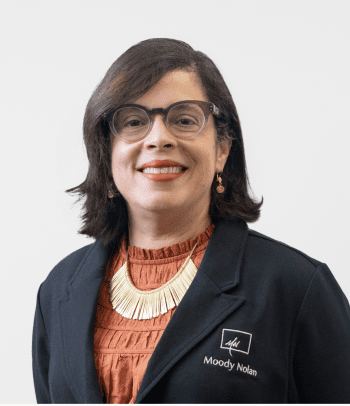
However, brick-and-mortar retail can play a positive role in creating livable, walkable residential housing around — or in some cases above — big-box stores. In fact, an 800-unit mixed-use apartment complex in the Baldwin Hills area of Los Angeles will be built on top of a ground-level Costco. The project could point the way to other retail-anchored development, according to Yanitza Brongers-Marrero, Housing Practice Leader at architectural firm Moody Nolan, who discussed both the challenges and the benefits to retailers.
Retail TouchPoints (RTP): Your firm handles many types of architecture projects, including sports and recreation, health care and education. Does that range of expertise help in creating mixed-use properties that combine retail and housing?
Yanitza Brongers-Marrero: We’re the largest African-American owned and managed architectural firm in the country, with 350 team members across 12 U.S. offices, and we pride ourselves on serving multiple types of clients, including retail. Housing has grown exponentially for us in the last 10 to 12 years, including student, affordable and mixed-use family living and some senior living, so we can cross-pollinate ideas from different housing types and harness the best ones.
RTP: What’s your assessment of the Costco project in Los Angeles? Is it something that could be replicated in other markets or with other retailers?
Brongers-Marrero: We weren’t involved with this project, but we have studied it as an interesting housing model. The Baldwin Village area is a neighborhood with high poverty rates, and overall there’s a big need for housing in southern Los Angeles, especially with its large houseless population.
One factor that’s important is that the city changed its regulations to mandate that big-box retailers like Costco also provide housing — essentially saying, ‘You won’t get your permit unless you help us solve some of these issues.’ It’s legislation and policy that create the runway for more creative solutions. Additionally, this area is close to public transit — the city is investing a large amount of dollars in infrastructure like this that will serve the residents of southern LA. [All these factors mean that] when you’re thinking about making the best use of a piece of land, it makes sense to try to combine [retail and housing] on that site.
You’ll see that in more inclusionary housing and mixed-use developments, a percentage of the residential units have to be reserved for people who are below a certain average median income (AMI) — say 25% of the units going to people who are at 80% of AMI. Some major metropolitan areas have these inclusionary requirements, including Columbus, Ohio and Philadelphia, and that’s helping.
RTP: What are some of the challenges involved with a development like this?
Brongers-Marrero: A common challenge with building housing above a big-box retail store is that [the housing units] are not very connected to the area at street level. Additionally, to add parking to a structure like this costs a lot of money, and there’s [always] a lot of financial pressure on these projects.
The question becomes, how do you connect residents at street level to a grounded, walkable community? And how do people see [the retailer] as part of the neighborhood? For designs that include a big box store, having a more approachable “front face” can help.
In a more suburban area, where big box stores are on “islands” surrounded by a parking lot, there’s also the possibility of changing the paradigm. For example, the retailer could have a front “street” side that’s more people-friendly, with a plaza featuring places to sit and for kids to play. The “back” side would be more accommodating to cars.
RTP: Are retailers themselves spurring these types of developments?
Brongers-Marrero: We have retail clients that come to us and want to have retail in combination with housing, and since we have to accommodate their commercial requirements, it’s a benefit to having the retailer on board at the beginning. A good example is a project we’re doing in Norfolk, Va. Part of the site included a McDonald’s that was one of the highest-selling restaurants in the area, so of course we didn’t want to lose that in a new building. We created and designed a model that would have the restaurant’s drive-through inside a large building, which meant we had to accommodate the exhaust from the cooking equipment and plan accordingly, which will have an impact on the way we lay out the garage.
We’ve also done conceptual work in terms of potentially targeting Target stores in major cities. With these, it’s not as much about cooking equipment, but they do have a bigger footprint as well as parking and other commitments. Typically a big box “floor plate” would be 30,000 to 40,000 square feet for a typical mid-rise building, and the sooner [the retailer] comes to the table, the easier it is to design around that.
RTP: How do developments like this fit in with retailers’ business purpose and mission?
Brongers-Marrero: These big-box retailers fill a huge need that’s for the good of the community. The stores can be merchandised to respond to the neighborhood, so if they offer a Hispanic or other ethnic assortment, it fills the needs of that community — especially in neighborhoods that are food deserts, which means there are issues of people not having access to healthy food choices.
If we’re looking to be a better society, we need to collaborate [on these issues] with retail, because that’s paramount to the success of the communities we work in.